Diamonds in the Rough or Disaster? Inside Damaged & Salvage Car Auctions in Australia
In all capital cities, you’ll find damaged and salvage vehicle auctions being held regularly for vehicles that have either been processed under insurance claims or have some other damage. Often, these sales will include stolen and recovered vehicles, damaged vehicles classified as repairable, and vehicles classified as complete write-offs.
Usually, these vehicles come from insurance companies where the vehicle has been in an accident and deemed uneconomical to repair. So, for the insurance company, that means it’s easier to pay out the owner for the agreed value or replacement cost, rather than paying to have the vehicle repaired.
Some vehicles, especially imported vehicles that are a few years old, get written off for the smallest damage, simply because the parts are so expensive. The same can go for new vehicles too, with new parts being so expensive, or when the industry lacks the skills or confidence to repair certain types of vehicles, the vehicle will be written off with what appears to be minor damage. Some new model EVs are a great example, where the industry does not yet have the training to repair these vehicles with confidence.
On the other hand, vehicles can be a total loss due to catastrophic accident damage or flood damage.
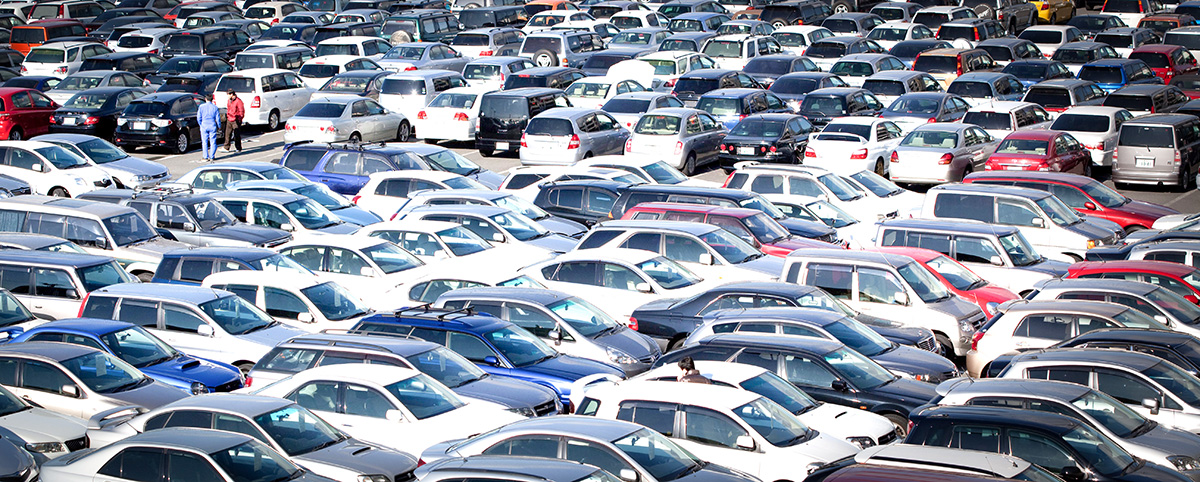
So, who buys from Salvage Auctions?
A large number of people bidding will be parts recyclers (aka wreckers) who are simply buying more stock for dismantling and selling off parts. The other bidders will be panel beaters or mechanics who intend to repair the vehicle for their own use or to sell.
Vehicle Classifications
The first thing to be aware of when buying at salvage auctions is how the vehicle is classified. How the vehicles are classified affects whether they can be returned to the road, and if so, whether they will forever have a “branded” title. In this case, a branded title means its record will show a past accident, and sellers have an obligation to report this to potential buyers.
This classification system (WOVR – Written Off Vehicle Register) and the rules can differ from state to state, but basically, there are 3 classifications:
- Vehicles with no classification (no WOVR recorded, usually because it’s an old vehicle)
- Vehicles registered as a Repairable Write-Off
- Vehicles registered as a Statutory Write Off (can never be put back on the road)
No WOVR recorded
In certain states, if the vehicle is more than 15 years old, then no record is made on file as to its status. Also, if the vehicle has not been assessed, then it may be damaged but not have any record made on file. Technically, these vehicles can be repaired and put back on the road without the need for a special inspection beyond what is required for any vehicle. Whether it’s worth doing so is a question only you can answer.
There appears to be some confusion over vehicles that are stolen and recovered, which are generally not put onto the Written Off Vehicle Register. However, you should seek confirmation from the auctioneer as to the vehicle’s status before bidding.
Repairable Write-Off
If it is a Repairable Write-Off, after repairs have been completed, it will generally require a specialised inspection at your expense prior to getting the vehicle registered. This inspection, for one, attempts to curb the illegal practice of ‘re-birthing’ cars and the use of stolen parts.
The cost of these inspections varies from state to state, but at the time of writing, averaged around the $450 mark. An extra cost worth remembering when bidding on the vehicle. Also, worth noting is that these inspections can require the vehicle for the day, and you will also have the cost of moving the vehicle from the place of repair to and from the inspection centre. And also worth noting is that there can be a waiting period before a booking becomes available at one of these centres. Repairers in Queensland have expressed dismay at having to wait weeks to get the car in for an inspection. All the stuff that’s worth remembering when bidding.
In Tasmania, the process differs slightly with the added requirement of a ‘Structural Check’ by an approved motor body repairer.
Statutory Write-Off
If it is a Statutory Write Off that means the vehicle can not be put back on the road in Australia. It can be used for parts only. Vehicles have to be marked as a Statutory Write Off when they have been in saltwater or freshwater above the dashboard for more than a certain time, and also in cases of extreme damage.
Check the laws in each state: NSW – VIC – QLD – SA – NT – WA – TAS
Is it Worth Buying A Car from a Damaged Car Auction
That’s an interesting question. You really need to know your stuff when it comes to buying a vehicle at these types of auctions. Repairing crash-damaged vehicles, particularly high-end vehicles, has been popularised on YouTube by Matt Armstong and Freddy Tavarish, who subsidise their projects via YouTube earnings. Whether it’s worthwhile for the average mechanic or panelbeater is a case-by-case exercise.
Like any type of auction, there are stories of people ’snagging a bargain’ and also plenty of stories about people who unfortunately got burnt. You don’t want to be one of the latter!
Common Damage Types
Water and Flood-Damaged Cars
Cars that have been water-damaged can be particularly troublesome; they may appear to be in perfect condition, but sometimes their faults are well hidden.
At most damaged vehicle auctions, there is no way to perform any real tests to establish how the vehicle runs or operates, so while you can walk around the outside of the vehicle, there is much you just won’t know.
Late-model vehicles don’t like water; there is a fair chance that there will be damage to vehicle computers and related electronics, and on some vehicles, this can be big-dollar stuff. If you can’t get a computer from a wrecker or refurbisher, you may be looking at thousands of dollars, as the price for genuine electronic components from some manufacturers is nothing short of extraordinary.
Also, with water-damaged cars comes the problem of the water entering both the engine and transmission/driveline. Transmissions and drivelines will survive some water ingress if the oil is drained and flushed sooner rather than later, but engines can be another story. If water has entered through the air inlet, then the engine may become ‘compression locked’, which means that the piston tries to compress a heap of water, and of course, it can’t, then it bends a cylinder rod. Also, cars can take months to get to the auction, so if there is water left in the cylinder, there could also be rusted bores and even engine seizure. When you go to an auction with water-damaged cars, you’ll probably see the air cleaners removed or opened. These are signs of people looking for possible water entry to the cylinder via the air intake.
With water-damaged cars, there’s also the cleaning side. Sounds easy, but more than likely you will have to remove the whole interior, including seats and carpets, to dry out the existing water, clean out mud, etc. and get rid of mould and the musty smell if it has been sitting around.
Some auction centres have even been cleaning water-damaged vehicles and getting them up and running before the auction, but keep in mind that electronics can still fail down the road, and there is still the Written Off Vehicle inspection cost before registration.
Panel Damaged Cars
More than likely, if you are looking at cars like this, then you are probably an experienced panel beater. You’ll have the experience to be able to assess the work involved in getting the vehicle back to a suitable condition.
But there is something worth noting, and that is that some insurance companies have a new parts-only policy, so the panel beater buying at auction can generally repair the vehicle for much less than the insurer would have quoted. This is often seen with imported vehicles, where the insurer will be forced to write the vehicle off due to the exorbitant cost of new parts coming from overseas. Vehicles like this have been seen at auction with nothing more than trim damage! Panel beaters who can get the parts from a wrecker can often pick up an easy-to-repair vehicle.
Hail Damaged Cars
If you couldn’t care less about external aesthetics, then here is where you can pick up a whole lot of car for a discounted price. It doesn’t take a lot of hail damage to see a car be written off, particularly older vehicles. But remember, you will still need to get a Written Off Vehicle Inspection, and if you decide to sell the car later, it can be tough unless you are selling at a heavily discounted price or you have the damage repaired.
Wrapping it up
Once you have the Written Off Vehicle Inspection done, you then need to clear to register the vehicle and be on your way, but it will always be on the record that this vehicle was once a Written Off Vehicle. For many people, it is no big deal as long as the vehicle has been properly repaired, but some people may be put off, causing difficulty when trying to sell the vehicle.
There is a big risk factor when buying from this type of auction, even for experienced players! So due diligence must be exercised. Always be sure about the status of a vehicle before bidding, and check with the relevant transport or road safety department in your state for exact requirements and legalities surrounding damaged and written-off vehicles.
You need to clearly understand the costs of getting the vehicle back on the road, the extra inspection fees, state-by-state requirements, and your expectations. Like anything, there are diamonds in the rough, but they only come about via due diligence.
Also, keep an eye on our salvage category for sale notices. In general, most insurance salvage vehicles are processed through IAA (new to Australia in 2025), Manheim, and Pickles.
Editor’s note: this article was originally published in 2010 and refreshed in 2025 and refreshed again for 2026, adding additional information.












Great article. You also have to be careful with flood damage vehicle. When purschasing a flood damage vehicle it is always good if you could find out what kind of water flooded the vehicle and how high. Stay away from vehicle that have been in salt water flood only buy fresh water flooded vehicle.
Hi does an insurance company have to write a damaged car off by law or could it just have them auctioned off without the wovr.