Pickles vs Manheim vs Slattery: Which Car Auction Wins in 2026 (Fees, Inspection Access + Real Verdicts)
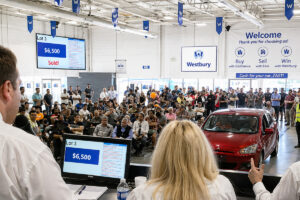 Thirty years of walking the lanes at Pickles and Manheim teaches you one thing faster than anything else: the buyers who get burned are not dumb. They are just unprepared. The auction is nothing like a car dealer, and the more clear-eyed you are about the fees, the ‘as-is’ reality, the inspection limitations, and post-sale deadlines, the better your chances of walking away with a genuine bargain instead of an expensive lesson.
This guide covers every major Australian car auction platform in 2026, gives you a step-by-step buying playbook, and finishes with a state-by-state breakdown of your legal rights and who to call when something goes wrong. It is written for private buyers, enthusiasts, and anyone who has ever wondered whether buying at auction is worth the risk. (It can be. That’s the whole point.)
7 Things You Must Know Before You Bid
- Every auction sale is ‘as-is, where-is’. No warranty. No cooling-off period. No statutory right to return. The Australian Consumer Law (ACL) consumer guarantees that apply at a dealership largely do not apply at auction. Once the hammer falls, that vehicle is yours.
- The hammer price is not your total cost. Add buyer’s premium (up to 22% at Lloyds), stamp duty, transport, roadworthy certificate, and admin fees. A winning bid of $15,000 can realistically cost $18,000+ all-in before you drive it home.
- You cannot test drive the car. At every major platform, you are limited to starting the engine and engaging a gear while stationary. No diagnostic tools in most yards. No independent mechanic access unless specifically arranged in advance.
- Run a PPSR check before every bid. The Personal Property Securities Register (ppsr.gov.au) tells you if a vehicle has outstanding finance, has been stolen, or has been written off. It costs $2.00. Whilst auction houses should guarantee accuracy and provide this info, for $2, just do it.
- Collection deadlines are punitive and non-negotiable. Pickles charges storage from Day 1 after auction. Manheim charges approximately $66 per day from Day 3. Lloyds charges $22 per day from Day 3. Have transport arranged before you bid, not after.
- This is currently a buyer’s market. Used car demand softened significantly in late 2025, with average days-to-sell hitting 47 days in December 2025 (AutoGrab, 2026). Supply is up across fleet, EV, and salvage categories. Competition at auction has eased from the pandemic-era frenzy. There is genuine value in the lanes right now.
- EVs are arriving in volume, but battery health is uncharted territory. Pickles reported a 20% jump in EV auction volumes in early 2026. There is no standardised battery state-of-health certificate required at auction. Apply a risk discount to any EV listing that does not include a manufacturer-issued battery health report.
The 2026 Australian Auction Market: What’s Actually Happening
The Australian used car auction market is bigger, faster, and more digital than it has ever been. The market hit approximately US$85.5 billion in 2025 and is forecast to grow at 10.4% per annum to US$217 billion by 2034 [1]. Auction volumes recovered strongly after COVID: Manheim alone reported a 32% increase in dealer-consigned vehicle volumes in H1 2025 [3]. Pickles, the country’s largest auction house by unit count, shifted over 228,000 vehicles in the past year [2].
Every major platform now runs simultaneous live and online bidding. PicklesLIVE, Manheim BidNow, Grays.com, LloydsOnline, and CarBids all let you bid from your kitchen table or the auction floor at the same time. That access is genuinely useful. It also means you are now competing against a national pool of buyers, including professional dealers, on every lot.
The NVES Effect: More ICE Stock, More EVs
The January 2025 introduction of Australia’s New Vehicle Efficiency Standard (NVES) is pushing older high-emission internal combustion engine (ICE) vehicles out of new car strategies and into wholesale and auction channels at an accelerating rate [7]. For buyers, this means a steadily increasing supply of late-model fleet utes and SUVs in the lanes. The Ford Ranger, Australia’s best-selling vehicle for consecutive years, is already appearing in ex-government and ex-corporate auction lots as fleets electrify.
Meanwhile, early-generation EVs from the first wave of Australian consumer adoption are coming off lease and hitting auction. This is new territory for the market and for buyers. More on EV-specific risks below.
Prices Are Softening. That’s Your Window.
The pandemic-era used car market, where vehicles sold in under 30 days and hammered well above retail, is over. Average days-to-sell reached 47 days in December 2025 (AutoGrab, 2026) [4]. Dealer margins are compressing. Competition in the auction lanes for mid-range stock ($10,000 to $40,000) has eased measurably. If you know what you are looking at, and you do your homework on fees and condition, you can find legitimate value right now.
Platform Comparison: Every Major Australian Car Auctioneer
Not all auction houses are built the same. The platform you choose determines your inspection access, your fee exposure, the quality of stock, and what recourse you have if something goes wrong. Here is an honest, independent assessment of every major player.
Pickles
Government & Fleet
Ex-government fleet, salvage, hail. 228,000+ vehicles/year. National branch network.
$525 flat (under $2k hammer); $650 + 1.65% (over $2k). ~$100–130 live bidding fee. $100 EV surcharge.
No – Pickles have stopped offering inspections for anything other than specialised machinery. Bid accordingly, or not at all.
PicklesLIVE and PicklesONLINE. Simulcast. Mobile app.
Charged from Day 1 post-auction.
Manheim
Dealer & Volume
High-volume dealer, fleet, and manufacturer lease returns. Biggest trade-facing platform in Australia.
$500 flat (under $2k); $650 + 1.5% (over $2k). $88 admin fee. Card surcharges apply.
Yes – on-site at branches. Walk-around only. No test drives.
Manheim LIVE simulcast. BidNow portal. App (reported reliability issues in 2025).
~$66/day from Day 3. Late payment: $121/day.
Grays / Slattery
Online Clearinghouse
Online clearinghouse. End-of-life fleet, commercial, salvage. Slattery handles prestige and government lots.
~10–15% of hammer + GST (varies by lot). 10% non-refundable deposit if buyer reneges. Late payment: 1%/week.
Grays: online photos and descriptions only. Slattery: in-person with key access available. No test drives.
100% online (Grays.com). Slattery also runs live events.
Lloyds
Prestige & Classic
Classic cars, prestige vehicles, and salvage. Live-final-bid format. Expanding into fleet.
12.5% to 22% buyer’s premium (variable by lot). Steepest of any major platform.
Yes – in-person inspection at auction. No test drives.
LloydsOnline portal. Absentee bidding available.
$22/day after Day 3. Defaults: Lloyds resells and charges buyer for any shortfall.
CarBids
Digital-First
Digital-first. Mostly ex-government and fleet. Consumer-friendly UX. Popular in ACT and NSW.
~12.5% buyer’s premium. $500 refundable deposit required to register as a bidder.
Yes – in-person inspection available (verify per listing). No test drives.
100% online. No live floor auction presence.
All bids are legally binding. Refund only if auction cancelled by platform.
Local Auctioneers
Regional
Regional and community auctions. Curated or mixed lots. Smaller scale, more personal.
Fixed commission (~$100) or small percentage (~5%). Immediate or next-day payment typical.
Often same-day window. Some allow independent pre-inspection. Limited formal reporting.
Variable. Some use simulcast; many remain in-person only.
Typically 10–20% higher than national lane results, but lower risk and more flexibility.
Understanding the Real Cost: Fees, Premiums, and What Nobody Tells You
This is where auctions separate the prepared from the painful. The fee structures are not complicated, but they are presented in ways that keep the true total invisible until after the hammer falls. Here is exactly what you are facing.
| Platform | Buyer’s Premium | Admin / Live Fee | Storage (per day) | Late Payment |
|---|---|---|---|---|
| Pickles | $525 flat (<$2k); $650 + 1.65% (>$2k) | ~$100–130 live fee; $100 EV fee | From Day 1 | Deposit forfeited on default |
| Manheim | $500 flat (<$2k); $650 + 1.5% (>$2k) | $88 admin; card surcharges | ~$66/day from Day 3 | $121/day after deadline |
| Grays / Slattery | ~10–15% of hammer + GST | Minimal | Varies by site | 1%/week; 10% deposit non-refundable |
| Lloyds | 12.5% to 22% (varies by lot) | Significant for high-end lots | $22/day from Day 3 | Resells & charges shortfall |
| CarBids | ~12.5% | $500 refundable deposit to register | After collection window | Debt recovery action |
| Sources: Platform fee schedules 2025–2026 (Pickles, Manheim, Lloyds, Grays, CarBids). All amounts AUD ex-GST unless noted. More here | ||||
Your Total Acquisition Cost: Run This Before You Bid
The All-In Cost Formula
$15,000 hammer at Manheim. Add $650 buyer fee + 1.5% over $2k ($848 total in fees). Add $88 admin. Add $400 interstate transport. Add $350 RWC. Add $600 stamp duty. You just turned a $15,000 bid into an $18,000-plus car. Do this maths before you bid, not after.
How to Buy a Car at Auction in 2026: Step by Step
Here is the actual process. Not the glossy version from the auction house’s ‘how it works’ page. The version from someone who has done it enough times to know exactly where the traps are.
Step 1: Research Before You Register
Know what the car is worth at retail before you know what to bid at auction. Spend time on Carsales, Facebook Marketplace, and eBay Motors looking at comparable vehicles in comparable condition. Use RedBook for trade and private sale benchmarks. What does a clean 2019 Ford Ranger XLT with 80,000 kilometres cost on Carsales today? That is your retail ceiling. The auction should give you enough margin below that ceiling to absorb fees, any rectification work, and still represent genuine value.
Identify your walk-away number: the maximum all-in cost you are prepared to pay, including every fee in the formula above. From that, subtract the fees to arrive at your maximum hammer bid. Write it down. Do not deviate from it in the room.
Step 2: Register Early – and Read the T&Cs
Every platform has its own registration process. CarBids requires a $500 deposit processed before you can bid. Pickles requires a MyPickles account with driver’s licence verification. Manheim has separate access for dealers and private bidders. Do not leave registration until the morning of the auction. Do it at least three days in advance.
Read the Terms and Conditions. Yes, actually read them. The fees, payment deadlines, storage charges, and dispute policies are all in there. They are not exciting reading. They are also not optional reading, because you agree to all of them the moment you register a bid.
Step 3: The Inspection Day – What to Actually Look For
If the auction house offers inspections, use it, and personally, I would only bid on that condition unless I was a dealer turning over cars every day. That fact rules out Pickles auctions for me as they no longer offer inspections.
The inspection window is your only opportunity to protect yourself. Some auctions allow engine start and gear engagement without moving the vehicle. Some, like Slattery, allow a keys-in-hand walk-around. Use every minute of the inspection window. Here is the priority order.
Structural, first and always. Crouch down and look along the body panels from front to rear on both sides. Ripples, wavy reflections, or colour mismatch indicate panel replacement or filler. Lift the bonnet and check the chassis rails and firewall for signs of straightening, welding, or prior repair. A freshly pressure-washed engine bay on an otherwise dusty vehicle should trigger immediate scepticism.
Underbody matters more than the top. Get down and look underneath. Rust on the floor pan, chassis rail, or subframe is structural, not cosmetic. Budget $3,000 to $8,000 minimum for serious underbody remediation on a vehicle worth less than $15,000, and even then the maths often do not work.
Start the engine and listen. A healthy engine idles evenly and consistently. Ticking or knocking at startup that clears after a minute could indicate worn cam phasers or low oil pressure. Blue smoke on startup means oil consumption. White smoke when warm (not just cold-morning condensation) means coolant entering the combustion chamber. These are four-figure repair bills, minimum.
Interior wear tells a story. A seat bolster worn through on the driver’s side on a vehicle with declared low kilometres is a red flag for odometer misrepresentation. The ACCC specifically identifies odometer fraud as an ongoing problem in Australian car auctions [ACCC]. If the wear pattern does not match the stated kilometres, note it in writing before the auction closes.
Most auction houses prohibit OBD2 diagnostic scanners. Some auctioneers allow approved specialist inspection services like Double Chex. If that option is available on your lot, pay it. The fee is typically $150–$250 and it is almost always worth it on any vehicle over $10,000.
Step 4: Bidding Strategy – Stay Disciplined
Auction rooms are engineered to create urgency. That is not an accident. It is the design. Your job is to stay disciplined against that pressure.
You have already written down your maximum hammer price. It does not move. If your all-in budget is $20,000 and total fees are $2,500, your maximum hammer bid is $17,500. That number is set before you walk in, and the energy in the room does not change it.
Vendor bids are legal in most Australian states. In Victoria and Queensland, auctioneers can make multiple vendor bids to push the price toward the seller’s reserve. If you hear a bid announced with no visible competing bidder, it may be a vendor bid. It is not another buyer competing with you. Do not respond emotionally to it.
Online latency is a real problem. Bidding online on a simulcast auction where floor bidders are also present means your bid registers with a delay. Community forums consistently advise against last-second sniping on online platforms for exactly this reason. Place proxy bids early rather than trying to hit the final seconds.
Bonus-time extensions (used by Grays and Slattery, where the closing time extends when a bid is placed in the final moments) are not a scam, but they are designed to extract the last increment from competitive buyers. If you have hit your ceiling, let it go. There is always another lot.
Step 5: After the Hammer – Act Fast
You have won the lot. The clock is running immediately.
- Pay your deposit immediately if required by the platform.
- Check your invoice carefully. Confirm the buyer’s premium and all fees match what was published before the auction.
- Arrange transport immediately, especially for unregistered or non-driveable vehicles.
- Book your collection slot with the auction house. Many sites require a booking, not just a pickup.
- Pay the full invoice by the published deadline. Late fees are punitive and non-negotiable.
- Arrange a Roadworthy Certificate (RWC) if required for registration transfer in your state.
- Complete title transfer at your state transport authority and pay applicable stamp duty.
Grays’ de-registration and title transfer process has been widely reported as slow, with buyers waiting weeks for documentation needed to re-register a vehicle. If you are buying through Grays and the vehicle requires re-registration, build extra time into your plan and follow up in writing at every stage.
Buying an Electric Vehicle at Auction in 2026
The used EV market at auction is heating up fast. Pickles reported a 20% jump in EV auction volumes in early 2026, with days-to-supply collapsing as first-wave lease vehicles hit the market in meaningful numbers [2]. That presents a genuine opportunity, but EV-specific risks are categorically different from anything you face buying a petrol or diesel vehicle.
Battery State of Health: The Critical Unknown
An EV battery’s health depends on factors that are invisible without specialist equipment: thermal management, charging habits, depth-of-discharge patterns. Unlike mileage on an ICE engine, kilometres driven is only a partial proxy for battery wear. Pickles published fleet data in Q4 2025 showing that heavy DC fast-charging usage resulted in less than 2% state-of-health (SoH) variation across 800-plus EVs. Encouraging in aggregate. Not useful for the specific vehicle you are about to bid on.
There is currently no standardised battery SoH certificate required at auction for EVs. Some listings include manufacturer-generated data. Many do not. Until the industry standardises this, apply a risk discount to any EV lot without a vehicle-specific SoH report, and budget for the possibility that usable battery capacity may be 10–20% below the manufacturer’s original specification.
Stamp Duty and NVES Incentives
Several states offer stamp duty exemptions or reductions on EV purchases. These vary by jurisdiction and change regularly. Check the current position in your state before finalising your total acquisition cost calculation. An exemption that saves you $500–$1,500 matters at auction, where margins are tight.
Know Your Rights: Consumer Protection at Australian Car Auctions
The auction house’s terms and conditions will tell you the sale is as-is, the auctioneer bears no responsibility, and your only recourse is against the vendor. That is largely correct. But it is not the whole picture. The Australian Consumer Law (ACL), Schedule 2 of the Competition and Consumer Act 2010 (Cth), applies at auction even when the T&Cs suggest otherwise. The ACCC’s $10 million fine against GraysOnline in 2024 for hundreds of misleading listings proves that consumer protection law has real teeth in the auction environment [ACCC 2024].
National Protections That Apply Regardless of the T&Cs
- Misleading and deceptive conduct is prohibited (ACL s18). If a condition report materially misrepresents a vehicle’s condition and you relied on it when bidding, you may have a claim against the auction house or vendor.
- False representations about goods are prohibited (ACL s29). This includes odometer misrepresentation. The ACCC treats this as a priority enforcement issue.
- Unconscionable conduct (ACL ss20–22) may apply in extreme cases.
- PPSR protections: Under the Personal Property Securities Act 2009 (Cth), if a vendor sells a vehicle with an undisclosed security interest, priority rules may protect a buyer who purchased without knowledge of it.
- Written-off vehicle non-disclosure is a breach of state motor vehicle laws in every Australian jurisdiction. If a vehicle is on the Written-Off Vehicle Register (WOVR) and this is not disclosed, you have a clear basis for complaint.
State-by-State Consumer Protection Contacts
If your complaint is not resolved by the auction house, your first call should be to the relevant state consumer agency. The table below gives you everything you need.
| State / Territory | Consumer Agency | Key Legislation | PPSR / Title |
|---|---|---|---|
| NSW | NSW Fair Trading 13 32 20 |
Auctioneers and Agents Act 1941; Motor Dealers and Repairers Act 2013; ACL | Service NSW · ppsr.gov.au |
| VIC | Consumer Affairs Victoria 1300 558 181 |
Auction Sales Act 1958; Motor Car Traders Act 1986; ACL. Max 3 vendor bids (must be disclosed). | VicRoads · ppsr.gov.au |
| QLD | Office of Fair Trading QLD 13 74 68 |
Property Occupations Act 2014; Motor Dealers and Chattel Auctioneers Act 2014; ACL | Queensland Transport · ppsr.gov.au |
| WA | Consumer Protection WA 1300 304 054 |
Auction Sales Act 1973; Motor Vehicle Dealers Act 1973; ACL | DoT WA · ppsr.gov.au |
| SA | Consumer and Business Services SA 131 882 |
Second-hand Vehicle Dealers Act 1995; ACL | Service SA · ppsr.gov.au |
| TAS | Consumer, Building & Occupational Services TAS 1300 654 499 |
Auctioneers and Real Estate Agents Act 1991; ACL | Service Tasmania · ppsr.gov.au |
| ACT | Access Canberra 13 22 81 |
Agents Act 2003; ACL. CarBids is heavily active in ACT for ex-government lots. | Access Canberra Motor Vehicles · ppsr.gov.au |
| NT | NT Consumer Affairs 1800 019 319 |
ACL applies. Limited NT-specific auction legislation. | MVR NT · ppsr.gov.au |
National Bodies
- ACCC (Australian Competition & Consumer Commission) – 1300 302 502. Lodge complaints about misleading listings, odometer fraud, or unconscionable conduct. The ACCC tracks complaint volumes and uses them to prioritise enforcement action.
- PPSR (Personal Property Securities Register) – 1300 007 777. Search for security interests, theft reports, and write-off status. $2.00 per search. Do it for every vehicle.
- AFCA (Australian Financial Complaints Authority) – 1800 931 678. If the purchase was financed and disputes arise with your lender.
- State consumer tribunals (NCAT in NSW, VCAT in VIC, QCAT in QLD, SAT in WA, TASCAT in TAS, ACAT in ACT): accessible, low-cost, and legally binding for disputes up to relevant monetary limits.
Many auction houses sell statutory write-offs for parts or export only. This must be clearly disclosed. If you purchase a statutory write-off without that disclosure and cannot re-register it in your state, your recourse is via ACL misleading conduct provisions against the vendor or auctioneer. Check the written-off register, which is accessible via the PPSR national search at ppsr.gov.au, before every bid.
When Things Go Wrong: Dispute Resolution
They will tell you it is as-is. They are correct, legally. But as-is does not make all recourse disappear if the vehicle was materially misrepresented, the odometer was wound back, or a write-off status was deliberately concealed. Document everything the moment you identify a problem. Photograph and video the issue in detail. Then contact the auction house in writing, not by phone. Email creates a paper trail. Phone calls do not.
The escalation path, if the auction house does not resolve the complaint, is: state consumer agency, then state consumer tribunal, then magistrates’ court for higher-value claims. Legal advice is worth seeking before the tribunal step if the amount is significant. The cases that succeed are those with clear and documented misrepresentation: odometer fraud, undisclosed write-off status, or a condition report that stated no accident history when one clearly existed.
The best dispute resolution is the one that never has to happen. Inspect in person. Check the PPSR. Read the condition report critically. Know your walk-away number. These four habits prevent the overwhelming majority of post-auction disasters. The paperwork is less exciting than the bidding. It is also the part that actually protects you.
Quick Reference: The Pre-Auction Checklist
Before You Register
- Research comparable retail pricing on Carsales, Facebook Marketplace, and eBay Motors.
- Use RedBook for trade and private sale value benchmarks.
- Calculate your maximum all-in cost (hammer + all fees + transport + RWC + stamp duty).
- Determine your maximum hammer price from the all-in calculation and write it down.
- Register on the platform at least 3 days before the auction.
- Read the full Terms and Conditions and fee schedule.
- Have payment funds arranged and ready to transfer.
At the Inspection
- Bring a phone with camera. Use it on everything.
- Check body panels from low angle for ripples, filler, or colour mismatch.
- Inspect chassis rails, firewall, and engine bay for structural repair evidence.
- Start the engine and listen for knocking, ticking, or rattling.
- Check for blue or white exhaust smoke.
- Look underneath for underbody rust on the floor pan and chassis rails.
- Cross-check interior wear against declared kilometres.
- Note the VIN from the compliance plate and run a PPSR search ($2.00 at ppsr.gov.au).
- Check the written-off vehicle register for your state.
- Consider a specialist inspection service (Double Chex, NRMA, RAA, iCarCheck) for vehicles over $10,000.
During Bidding
- Do not deviate from your pre-set maximum hammer price. Not one dollar.
- Identify vendor bids as separate from genuine competing bids.
- Place proxy bids early if bidding online — do not snipe the final seconds.
- Walk away when you hit your ceiling. There is always another lot.
After Winning
- Pay your deposit immediately.
- Verify your invoice against the published fee schedule.
- Book transport for any unregistered or non-driveable vehicle straight away.
- Book your collection slot with the auction house.
- Pay the full invoice before the deadline.
- Arrange RWC if required in your state.
- Complete title transfer and pay stamp duty at your state transport authority.
References
Industry and Market Data
- Australia Automotive Market 2026: Surge to Reach 2.6 Million Units by 2034. OpenPR / IBIS World, 2026. openpr.com
- Pickles Quarterly Automotive Report, Q4 2025 Issue 8. Pickles, 2026. pickles.com.au
- Manheim Auction Volumes Rise Again. GoAutoNews Premium, 2025. goauto.com.au
- AutoGrab: Used Car Market Closes 2025 with Softer Demand and Longer Selling Times. AutoGrab, 2026. autograb.com.au
- Australia’s New Vehicle Market Remains Resilient. FCAI, 2025. fcai.com.au
- AutoGrab: Used Car Market Update 2025. autograb.com.au
- 2026 Australian Automotive Forecast. Cox Automotive, 2026. coxautoinc.com.au
- The Top 10 Challenges Defining the Australian Automotive Industry in 2026. Pitcher Partners, 2026. pitcher.com.au
Regulatory and Consumer Protection
- ACCC: Consumer Rights When Buying at Auction. accc.gov.au
- ACCC: GraysOnline Penalty for Misleading Listings, 2024. accc.gov.au
- Personal Property Securities Register (PPSR). Australian Financial Security Authority. ppsr.gov.au
- Personal Property Securities Act 2009 (Cth). legislation.gov.au
- Australian Consumer Law, Schedule 2, Competition and Consumer Act 2010 (Cth). legislation.gov.au
Platform Terms and Conditions (Current as at April 2026)
- Pickles Auctions: Terms of Sale and Buyer Fees. pickles.com.au
- Manheim Australia: Buyer Terms and Fee Schedule. manheim.com.au
- Lloyds Auctions: Terms and Conditions. lloydsauctions.com.au
- Grays Online: Buyer Terms and Conditions. grays.com
- CarBids: Buyer Terms and Conditions. carbids.com.au